
Country – Nepal
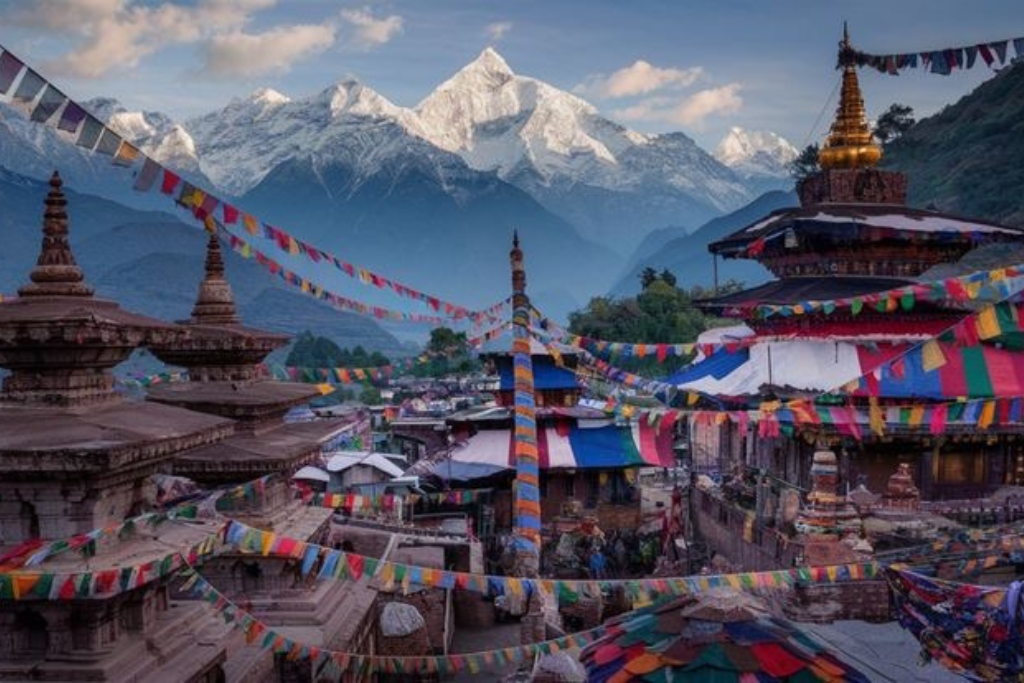
About The Country
Nepal: A Land of Majestic Mountains and Rich Heritage
Nepal is a beautiful landlocked nation located in South Asia, bordered by five Indian states—Uttarakhand to the west, Uttar Pradesh to the south, Bihar to the southeast, and Sikkim to the east. To the north, it shares its boundary with the Tibet Autonomous Region of China.
Spanning roughly 141,181 square kilometres, Nepal is nearly one and a half times larger than Portugal. With a population of around 30.3 million (as of 2021), the country is home to diverse cultures, traditions, and breathtaking landscapes. Kathmandu, the capital and largest city, is the centre of Nepal’s history, culture, and governance.
The majority of Nepal’s terrain lies within the Himalayan foothills, making it one of the most mountainous regions in the world. From snow-capped peaks to rolling hills, the country’s dramatic geography is as awe-inspiring as its spiritual and cultural legacy.
A Brief Look at MBBS in Nepal
Nepal has become a preferred destination for students aspiring to pursue MBBS abroad, especially for those from India. The country is home to 20 well-established medical universities, offering internationally recognized degrees.
Medical colleges in Nepal are approved by leading global medical bodies such as the National Medical Commission (NMC/MCI), FAIMER, ECFMG, and are listed in the World Directory of Medical Schools (WDOMS).
- Course Duration: 5 years and 6 months (including internship)
- Intake Period: Admissions generally start in September
Top Reasons to Study MBBS in Nepal
Choosing Nepal for your MBBS degree comes with several advantages that make it a smart and practical choice:
- Quality Education: Medical colleges offer up-to-date curriculum and clinical training.
- Affordable and Advanced Learning: Lower tuition fees compared to many private colleges in India.
- Globally Recognized Degrees: Degrees accepted by NMC, FAIMER, ECFMG, and other international bodies.
- FMGE/NExT Preparation: Colleges provide dedicated coaching for Indian licensure exams.
- Bilingual Teaching: Medium of instruction is both English and the local language, aiding better understanding.
- Cultural Comfort: Warm hospitality and a culture similar to India make students feel at home.
- Familiar Climate: Weather conditions closely resemble those of North India, aiding comfort and adaptation.
Key Features of MBBS in Nepal
Nepal has emerged as a promising destination for medical education, especially for Indian students seeking quality and affordability in a culturally familiar environment. Here are the core features that make MBBS in Nepal a smart choice:
- Student-Centered Academic Environment
Medical colleges in Nepal provide a safe, structured, and encouraging environment for students. The academic atmosphere promotes focused learning and supports a healthy balance between studies and personal well-being. - Universities with International Approvals
Nepal’s medical institutions are approved and listed by globally respected organizations such as the World Health Organization (WHO), World Directory of Medical Schools (WDOMS), FAIMER, ECFMG, and are recognized by medical councils in countries including India, USA, UK, Australia, and Canada. - Curriculum Aligned with Indian Standards
The MBBS syllabus in Nepal is closely aligned with that of India, making it easier for Indian students to adapt. Although the structure is similar, the teaching methods are more refined, focusing on updated clinical training and modern medical education techniques. - Modern Infrastructure and Medical Facilities
Nepalese medical universities are equipped with contemporary labs, digital classrooms, skilled faculty, and well-equipped hospitals, ensuring practical exposure and quality learning for students. - Balanced Course Duration
The MBBS course spans 5.5 years, with the first four years focusing on theoretical and clinical education, and the final year dedicated to hands-on internship training in hospitals.
Reasons to Study MBBS in Nepal
Pursuing an MBBS degree in Nepal is a smart and practical decision for students looking for international exposure without the high costs. Here’s why Nepal stands out:
- Affordable Education
Compared to private medical colleges in India and universities abroad, Nepal offers high-quality education at lower tuition costs, making it a budget-friendly option. - Globally Recognized Universities
Nepalese medical degrees are accepted across the globe, with universities listed under WDOMS, FAIMER, ECFMG, and NMC (formerly MCI)—opening doors to global career opportunities. - Low Cost of Living
Living expenses in Nepal are economical, especially for Indian students. Most hostels provide comfortable accommodations with modern facilities at affordable rates. - Technology-Driven Learning
Medical colleges in Nepal incorporate modern tech tools and digital resources in classrooms, making education more interactive, practical, and up-to-date. - Excellent Student-Faculty Ratio
Most universities maintain a low student-to-teacher ratio, often 20:1, ensuring personalized attention, better mentorship, and enhanced academic performance. - English as the Medium of Instruction
To support international students, especially from India, the primary language of instruction is English in almost all medical colleges, facilitating smooth communication and comprehension.
Advantages of Studying MBBS in Nepal for Indian Students
Nepal has become one of the top choices for Indian students aspiring to pursue MBBS abroad. With its cost-effective education, cultural familiarity, and recognized degrees, studying medicine in Nepal offers numerous advantages:
- No Admission Fees or Hidden Charges
The admission process is completely transparent. Students are not required to pay any additional or hidden fees during the enrollment process. - No Capitation or Donation Required
Unlike many private colleges, Nepalese medical universities do not demand any capitation fee or donations, making education more accessible and fair. - Visa-Free Entry for Indian Students
Due to the friendly diplomatic ties between India and Nepal, Indian students do not need a visa to study or stay in Nepal, making the transition smooth and stress-free. - Hassle-Free Admission Process
The admission procedure is straightforward with minimal paperwork. Indian students can easily apply based on their NEET qualification and required academic documents. - Affordable Tuition Fees
Compared to private MBBS colleges in India or other foreign countries, Nepal offers a much more economical fee structure, without compromising on quality. - Low Cost of Living
The living expenses in Nepal are budget-friendly. From food to accommodation, students can comfortably manage their lifestyle without a financial burden. - International Exposure with Global Recognition
Degrees from Nepalese universities are recognized by global medical bodies like NMC (MCI), WHO, FAIMER, ECFMG, and more—offering graduates the opportunity to pursue medical careers across the world. - Comfortable and Familiar Climate
The weather in Nepal closely resembles North India, ensuring Indian students can adjust quickly without the discomfort of extreme temperatures or climate change.
Top Medical Universities in Nepal for Indian Students
Nepal is home to several reputed medical colleges that provide excellent education and international recognition. Here are some of the top choices among Indian students for pursuing an MBBS degree:
- KIST Medical College
Situated in Lalitpur, KIST is known for its modern teaching approach, well-equipped laboratories, and a supportive learning environment tailored for both local and international students. - Institute of Medicine (IOM)
Affiliated with Tribhuvan University, IOM is one of Nepal’s leading medical institutes, offering comprehensive training in both clinical and non-clinical disciplines with a strong academic legacy. - Kathmandu University School of Medical Sciences (KUSMS)
KUSMS provides an integrated curriculum, modern medical infrastructure, and highly qualified faculty. It attracts students from across South Asia for its balanced academic and practical learning model. - B. P. Koirala Institute of Health Sciences (BPKIHS)
Located in Dharan, BPKIHS is an autonomous health sciences university that delivers quality medical education with a focus on research, innovation, and hands-on hospital training. - Manipal College of Medical Sciences (MCOMS)
Based in Pokhara, MCOMS is a well-established institution managed in collaboration with India’s Manipal Education Group. It offers a global standard of education and is especially popular among Indian students for its Indian-style academic framework.
Eligibility Criteria for Studying MBBS in Nepal
Indian students who wish to pursue MBBS in Nepal must meet the following eligibility requirements to secure admission:
- Minimum Age Requirement
Applicants must have completed 17 years of age on or before 31st December of the admission year. - Academic Qualifications
Candidates should have passed 10+2 (or equivalent) with a minimum of 50% marks in Physics, Chemistry, and Biology (PCB) from a recognized board such as CBSE, ICSE, or any state board. - NEET Qualification
As per the latest guidelines by the National Medical Commission (NMC), students must have qualified the NEET-UG examination in the admission year to be eligible for MBBS programs in Nepal.
Frequently Asked Questions (FAQs) – MBBS in Nepal
- Is an MBBS degree from Nepal accepted in India?
Yes, Indian students who complete their MBBS from a university in Nepal that is approved by the National Medical Commission (NMC) can practice in India. However, after graduation, they must pass the FMGE/NExT exam to receive a license to practice medicine in India. - Do Indian students need to clear NEET to study MBBS in Nepal?
Yes. As per NMC regulations, Indian students must qualify the NEET-UG exam to pursue MBBS abroad, including in Nepal. This is a mandatory requirement. - Why is Nepal a preferred country for MBBS among Indian students?
Nepal is a top choice because of its affordable education, cultural familiarity, similar medical syllabus to India, and the fact that Indian students don’t need a visa to study there. It provides high-quality education with minimal travel and documentation hassle. - Is studying MBBS in Nepal a good decision?
Absolutely. Nepal’s medical colleges are equipped with qualified faculty, practical-based learning, and modern infrastructure. Degrees from top institutions are internationally recognized, offering a great return on investment. - What is the annual cost to study MBBS in Nepal?
The average cost of studying MBBS in Nepal ranges between ₹8.4 to ₹9.5 lakhs per year, which typically covers tuition, accommodation, and food. Actual expenses may vary by university and personal lifestyle. - How long is the MBBS course in Nepal?
The course duration is 5 years and 6 months, with the first few years focused on classroom learning and the last 1.5 years dedicated to clinical internship at affiliated hospitals. - What documents are needed to apply for MBBS in Nepal?
Applicants must prepare the following documents:
- 10th and 12th-grade marksheets
- NEET-UG scorecard
- Government-issued photo ID (such as Aadhaar or passport)
- Passport-size photographs
Universities may ask for additional paperwork during the admission process.
- What makes Nepal a smart choice for Indian MBBS aspirants?
Indian students benefit from low tuition fees, no language barrier, close proximity to home, and recognized degree programs. The education system is similar to India’s, making it easier to adapt and succeed. - Are there any disadvantages of pursuing MBBS in Nepal?
While the advantages are many, some students might find the chilly climate in hilly regions a bit hard to adjust to. That said, most universities offer comfortable accommodation and support systems to help students adapt quickly. - How can I apply for MBBS in Nepal?
You can begin by contacting a trusted admission consultant or university representative. They will assist you with eligibility checks, document preparation, university selection, and guidance throughout the admission process.